


The Lutheran Study Bible
4.447.00 Reviews
App Specs
- Version
- 1.1.5
- Updated On
- License
- Free
- Downloads
- 10,000+
- Developer
- Concordia Publishing House
- Categories
- Books & Reference
- Platform
- Android
Screenshots
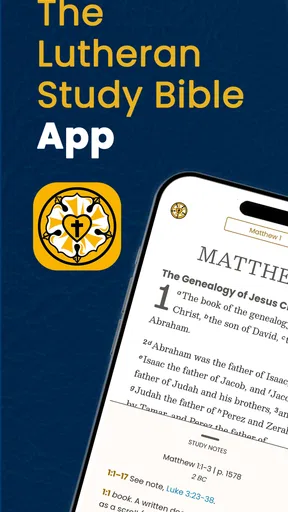
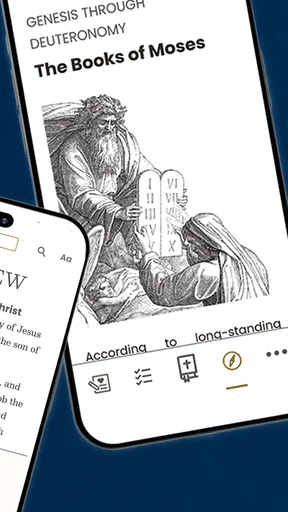
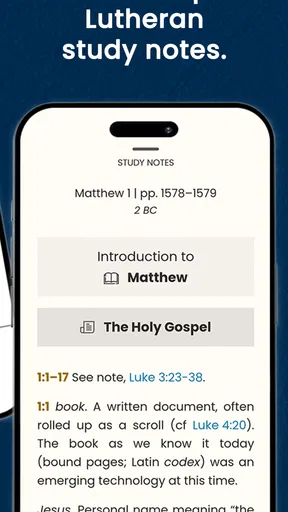
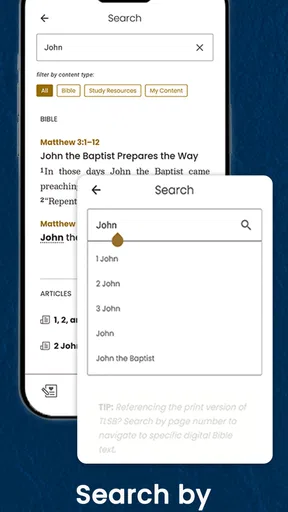
 Analysis by AppCompare
I approached The Lutheran Study Bible as both a reading tool and a reference app, not simply as another digital Bible. Developed by Concordia Publishing House, it sits in the Books & Reference category and is aimed at readers who want Scripture alongside deeper Lutheran study material. That distinction matters: the app’s appeal depends less on quick access to a Bible text and more on whether its notes help you understand, compare, and return to passages with a clear purpose.
My first impression is that this is best suited to deliberate reading. If I only want to look up a verse during a conversation, a basic Bible app may feel faster and less demanding. When I have time to read a chapter, investigate an unfamiliar passage, or prepare for a discussion, the study-focused approach becomes much more useful. The app is free to install, rated for Everyone, and has reached over ten thousand installs, so it is accessible to curious readers rather than being limited to a specialist audience.
What the study-focused approach feels like in everyday use
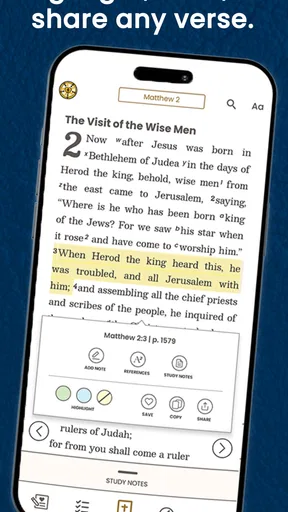
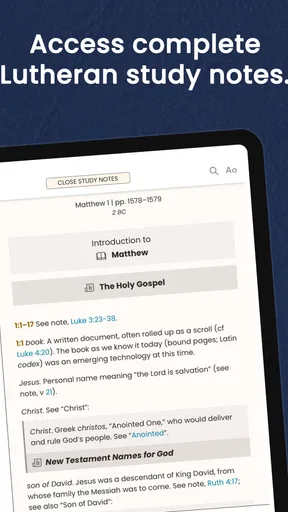
The central strength is the relationship between the Bible text and its in-depth notes. Instead of treating commentary as a separate resource that I need to open elsewhere, the app places study material close to the passage I am reading. That reduces the friction of moving between a printed Bible, a commentary, and a search engine. For someone who wants context without building a large personal library, that is a meaningful advantage.
I found the format most valuable when I resisted the temptation to read the notes as a replacement for the biblical text. The notes work better as a second layer: first read the passage, then consult the explanations, references, or observations that help frame it. This simple order prevents the commentary from becoming the only thing I remember and makes the app feel more like a guided study companion than an answer machine.
A realistic everyday use would be a quiet evening reading session. I might choose a chapter, read it once without interruption, then return to the sections that seem difficult or historically unfamiliar. The notes can give that second pass a clear direction. I can also imagine using the app before a church study group, where the goal is not merely to find a quotation but to arrive with a better grasp of the passage’s setting and interpretation.
That workflow also reveals an important trade-off. A study Bible can encourage slower, more thoughtful reading, but it is not always the best choice when I need speed. A lightweight Bible reader, a printed pocket edition, or a general search tool may be more convenient for quick verse lookup. The Lutheran Study Bible earns its place when understanding matters more than getting in and out of the app as quickly as possible.
Why the Lutheran perspective changes the experience
The app is not presented as a neutral reference shelf with every Christian tradition treated identically. Its identity is specifically Lutheran, and that should guide expectations. Readers already comfortable with Lutheran teaching may appreciate the familiar interpretive lens and the way the notes support study within that tradition. Readers from other backgrounds can still learn from it, but they should approach the commentary as a particular theological voice rather than as an entirely tradition-free explanation.
Worth Reading Before You Choose

EA SPORTS FC Mobile 26 Is a Bigger Football Game, but It Takes Time

Flipboard Shows What News Apps Must Do Beyond the Feed

Switching to Android Auto Means Rethinking Your Driving Routine

Google Calendar Makes a Crowded Week Easier to Manage

Ludo King Makes the Most of the Minutes Between Plans

Baby Panda World Brings Quick Play to Modern Phones, but Its Game Library Feels Busy
That makes the app especially useful for people attending a Lutheran congregation, studying Lutheran doctrine, or trying to understand how a Lutheran study Bible approaches difficult passages. It may also help a reader compare traditions more intelligently, because a clearly defined perspective is easier to evaluate than commentary that hides its assumptions behind vague language.
On the other hand, someone looking for an ecumenical resource may prefer a Bible app with several commentary traditions, translation options, or broader academic tools. This app is more focused than that. Its focus is a strength when it matches the reader’s needs and a limitation when it does not.
Trust begins with knowing what kind of tool this is
I think trust here begins with accurate expectations. Concordia Publishing House is identified as the developer, and the app’s stated purpose is a Holy Bible with in-depth notes. That gives me a clearer basis for judging it than a vague promise to “improve” Bible reading. I know I am opening a faith-oriented study resource, not an impartial research database or a general-purpose note-taking application.
The public signals are encouraging but modest. The app holds a 4.4 average from around one hundred ratings and has forty-seven written reviews. Those figures suggest that real users have engaged with it, but they are not large enough to settle every question about long-term reliability or compatibility across every device. I would treat the rating as a useful indication of satisfaction, not as proof that the experience will suit every reader.
The release date and version information also help place the app in context. It was released in April 2024 and is currently at version 1.1.5, which tells me this is a relatively young product rather than a decades-old digital platform. That can mean a cleaner, more focused experience, but it also makes it sensible to keep expectations realistic about polish, expansion, and how extensively every edge case has been refined.
For device compatibility, the listed minimum is OS 10. That is useful before installation, particularly if I am trying to use an older phone or tablet. I would check the operating system first rather than assuming that every Android or iOS device can run it simply because the app is free.
Visible controls and the cost boundary
The free entry point is one of the app’s strongest practical advantages. I can begin without paying an upfront purchase, which makes it easier to judge whether the Lutheran notes and reading style fit my habits. At the same time, the app includes optional in-app purchases ranging from $2.99 to $9.99 per item. That means “free” should be understood as free to start, not necessarily as a promise that every possible resource or enhancement is included without charge.
I would make a point of checking each purchase screen carefully before confirming anything. The important question is not only the individual price but also what the item unlocks and whether it is something I genuinely need. A useful personal rule is to use the free experience for several reading sessions first. If the included material already supports my normal study routine, there may be no reason to buy anything immediately.
This is also where user control matters. A responsible reader should review the platform’s purchase confirmation and authentication settings, especially on a shared device. I would not assume that a free download eliminates the need to pay attention to purchase controls. The app’s value should be judged by the study experience I can actually use, not by the possibility of acquiring every optional item.
The age rating of Everyone makes the app approachable for households and mixed-age reading environments. Still, an age rating describes suitability in broad terms; it does not tell me whether the theological depth will be appropriate for a child’s reading level. Parents, teachers, or church leaders may want to choose passages and explain the notes rather than handing the app over as a completely self-guided curriculum.
Data-sensitive moments deserve deliberate choices
Whenever I use a religious reading app, I pay attention to moments that could reveal more about my interests than a simple verse lookup would. Reading patterns, saved material, searches, account details, and purchase activity can all feel personal, particularly when the subject matter reflects faith or private reflection. I do not treat the presence of a study Bible as evidence of a problem, but I do think the user should remain alert to what the app asks for and what the device makes available.
My practical approach is simple: install from the official platform, read permission prompts instead of dismissing them automatically, and grant only what is necessary for the function I am trying to use. If a feature asks for access that does not seem connected to reading or study, I would pause and investigate before accepting. I would also review the app’s privacy and account information through the platform or the developer’s official materials, because those details can change independently of the reading experience.
Shared devices deserve extra care. If several people use the same phone or tablet, I would avoid leaving purchase screens open, keep device-level authentication enabled, and consider whether saved searches or reading activity should remain visible. These are not dramatic obstacles, but they are the kinds of small choices that protect personal space without preventing normal use.
I would take the same cautious approach with notifications. If the app offers any alerts, I would decide whether they help my routine or merely expose private reading habits on a lock screen. Turning off unnecessary previews is often a sensible compromise: I can keep the app available while limiting what appears publicly.
How I would build a reliable study routine
The most effective workflow I found is intentionally layered. I begin with a focused reading goal, such as one chapter or a short passage, instead of opening the app without a plan. I read the text first, mark the parts that raise questions in my mind, and only then use the notes. This prevents the commentary from steering my attention before I have formed my own understanding.
A second useful habit is to separate explanation from application. A note may clarify language, context, or interpretation, while my own response to the passage is a different matter. Keeping those two steps distinct makes the session more honest. I am less likely to confuse an explanatory note with a personal conclusion, and I can return later to see whether my understanding has changed.
For group study, I would use the app as preparation rather than as the sole authority in the room. I can read the assigned passage, consult the notes, and write down questions before the meeting. During discussion, I would compare what I learned with the group’s interpretation and with the wider Lutheran context. This is a better use than simply quoting a note to end a disagreement.
Another non-obvious benefit of a study app is consistency. A printed commentary may sit on a shelf while the phone is already with me during a commute, a lunch break, or a quiet moment before bed. That convenience can turn occasional study into a repeatable habit. The limitation is that a phone also brings distractions. I would use a focused session, silence unrelated notifications, and avoid jumping into unrelated apps between the passage and the notes.
Where it compares well, and where alternatives win
Compared with a basic Bible reader, this app offers more interpretive support. A basic reader usually wins on simplicity: open it, search, read, and close it. The Lutheran Study Bible asks more from me, but gives me more material to consider when a passage is confusing or when I want a guided study experience.
Compared with a printed Lutheran study Bible, the digital version is easier to carry and potentially easier to consult in short sessions. A physical book can be calmer, more comfortable for extended reading, and less vulnerable to notifications or battery concerns. I would choose paper for a long, distraction-free study at home and the app when portability matters.
Compared with broad Bible platforms, this app’s narrower theological identity may be either its clearest advantage or its main drawback. A large multi-resource platform can offer many translations, commentaries, reading plans, and cross-references in one place. That breadth is valuable for comparison, but it can also feel busy. This app is a better fit when I want a Lutheran study environment without sorting through a huge catalog of unrelated material.
There is also a cost comparison to make. Since the app is free to begin but includes optional purchases, a reader who wants a completely fixed-cost experience should inspect the available content before settling into it. Someone who already owns a printed study Bible may find that the app complements rather than replaces it. Someone starting from nothing may appreciate the lower initial barrier, provided the optional purchase model matches their expectations.
Who should use it and who should skip it
I would recommend it to readers who want Scripture and Lutheran notes in the same digital space, especially those preparing for church study, exploring Lutheran interpretation, or trying to move beyond quick verse searches. It is also a reasonable choice for readers who value portability and want to test a study Bible without paying an upfront price.
I would be more cautious about recommending it to someone who wants a neutral academic Bible reference, a broad interfaith library, or a highly customizable research platform. It may also disappoint readers who prefer a completely distraction-free paper experience or who expect every advanced resource to be included automatically with the free installation.
Families can use it as a shared reference, but I would still keep individual reading habits and purchase controls in mind. For students, it can support preparation, but it should not replace reading the primary text or consulting a teacher when a theological question is genuinely difficult. For casual readers, the notes may be welcome when curiosity strikes, though the app’s full value appears only when I return to it with some regularity.
My cautious verdict after weighing the trade-offs
The Lutheran Study Bible is most convincing when I treat it as a focused Lutheran study companion, not as an all-purpose Bible platform. Its free starting point, accessible age rating, and combination of biblical text with in-depth notes make it easy to try. The 4.4 average and modest but meaningful body of user feedback support the impression that it is serving a real audience, while the current version and relatively recent release suggest a product that is still developing.
I would install it if my goal were to read Scripture with Lutheran commentary close at hand. I would begin with the free material, test the reading flow on my own device, and review purchase and privacy choices before going further. I would also keep a printed Bible or a broader reference tool available for situations where comparison, extended reading, or a different theological perspective is more important.
My final recommendation is therefore positive but specific. This is a good choice for intentional Lutheran study and a less obvious choice for quick lookup, neutral scholarship, or a completely minimal reading experience. If that distinction matches what you need, the app offers a practical way to make deeper study part of an ordinary day without committing to a large physical library.
Pros
- Extensive cross-references help connect related passages throughout Scripture.
- Includes useful maps
- charts
- timelines
- and visual study resources.
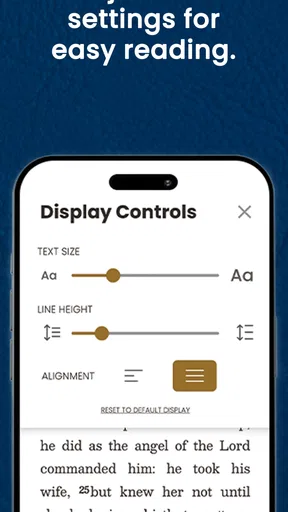
- Readable layout makes long study sessions comfortable on most devices.
- Bookmarks
- notes
- and highlights support personalized Bible study.
- Works well for readers seeking a distinctly Lutheran theological perspective.
Cons
- The large download may use considerable storage on some devices.
- Advanced study content can feel overwhelming for first-time Bible readers.
- Some features may require an internet connection or additional downloads.
- The interface may feel dated compared with newer Bible study apps.
- Its Lutheran focus may not suit users wanting ecumenical commentary.
FAQs for The Lutheran Study Bible
What is The Lutheran Study Bible app?
The Lutheran Study Bible app is a digital Bible study resource designed for readers who want to explore Scripture alongside Lutheran teaching and commentary. Depending on the edition and platform, it may include the full biblical text, explanatory notes, introductions, cross-references, maps, devotionals, and other study tools. It is intended for personal reading, theological study, and reflection rather than casual reading alone.
What Bible translation and Lutheran content are included?
The exact translation and study materials can vary according to the official edition, app version, and licensing available on Android or iOS. Users should check the store description before downloading to confirm whether the app includes the English Standard Version and the complete Lutheran Study Bible notes. The commentary generally emphasizes Lutheran interpretations, historical context, doctrinal explanations, Scripture references, and practical guidance for understanding difficult passages.
Does The Lutheran Study Bible work offline?
Offline availability depends on how the app handles downloaded Bible books and study resources. In many cases, basic reading may be available without an internet connection after the required content has been downloaded, while features such as synchronization, online links, updates, or media may require connectivity. Before relying on it for travel, church, or study away from Wi-Fi, open the app in airplane mode and verify which resources remain accessible.
Is The Lutheran Study Bible free to download and use?
The app may be free to install while offering paid access to the complete study Bible, additional resources, or specific editions. Pricing, subscriptions, and available features can differ between Android and iOS, so it is important to review the current store listing and in-app purchase information. Check whether notes, search tools, bookmarks, and the full biblical text are included before assuming that downloading the app provides unrestricted access.
Who would benefit most from using The Lutheran Study Bible app?
This app is especially useful for Lutherans, church members, students, teachers, and readers who want more context than a standard Bible-reading application provides. Its notes and references can help explain doctrine, historical background, and connections between passages. Beginners may appreciate the introductions and explanations, while experienced readers can use search, cross-references, and annotations for deeper personal study, sermon preparation, or group discussion.


